Why USA Live Roulette Table Felt Replacement Schedules Ignore the Calendar
Every pit boss in the United States learns the same hard truth within a month on the floor: felt does not die on a schedule, it dies in a pattern. A USA live roulette table felt replacement schedule built purely on a 90-day rotation is a fantasy cooked up by procurement clerks who have never watched a ball drop forty times an hour. The wear pattern in USA casinos tells a brutally different story, and any operator ignoring it is burning money on premature swaps or, worse, running a ripped layout that players spot before security does. 🎯
The Real Wear Pattern in USA Roulette Pits
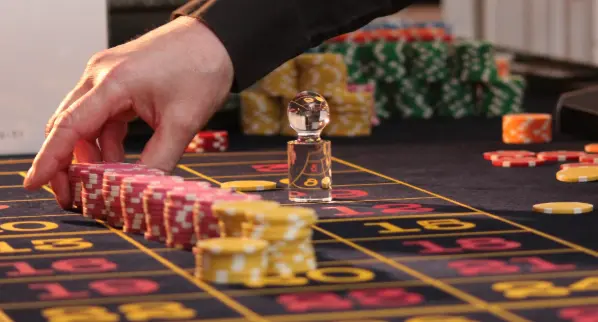
Track a double-zero wheel for six weeks and the felt degeneration maps almost perfectly to betting volume geometry. The heaviest erosion clusters around the outside bets, specifically the red/black and odd/even boxes, because casual players hammer those zones with chip stacks and lazy drags. The straight-up number grid wears far slower than most floor managers assume. What actually shreds a layout is friction from chip shuffling at the corners of the betting field, plus the acidic sweat and lotion residue that accumulates where hands rest between spins. In high-traffic Las Vegas and Atlantic City rooms, that translates to visible fiber blooming at the six-line and column bet intersections by week five, not month four.
Felt Specs That Change the Replacement Math
Not all layouts are created equal, and the USA live roulette table felt replacement schedule must be recalibrated per cloth grade. A 100% wool worsted felt with a tight weave survives roughly 2,800 to 3,200 drop cycles before pilling compromises ball roll consistency. Blended synthetics fail earlier, often around 1,900 cycles, and they fail catastrophically, with surface glazing that sends the ball skidding past the target pocket. Smart operators log spin counts per table and cross-reference against cloth batch numbers. Anyone running a flat calendar without spin-count telemetry is guessing, and guessing at the felt level means either a dead layout in play or a perfectly good one in the dumpster.
Reading the Erosion Zones Before the Players Do
Here is the field-tested diagnostic sequence. First, inspect the layout under raking light at a low angle; micro-fuzz at the column bet line signals the weave is opening. Second, run a thumb drag test across the red/black boxes; if the felt feels slick rather than slightly grabby, the surface has glazed and pocket accuracy is already drifting. Third, check the number grid perimeter for edge lifting, which traps debris and skews ball bounce. In USA rooms with continuous 24-hour operation, these three checkpoints should trigger every ten days, not quarterly. The wear pattern in USA properties is aggressive precisely because the play is relentless. 🎲

The Rotation Trap and Why Staggered Swaps Win
Wholesale felt replacement across an entire roulette bank on the same day is amateur hour. Staggered swaps, where one table gets fresh cloth every two to three weeks based on its individual spin log, keep the room visually consistent while spreading labor cost and downtime. The USA live roulette table felt replacement schedule that actually holds up under audit is a per-table ledger, not a wall calendar. Track drops, track chip friction zones, track cloth batch, and swap on evidence. Pit managers who run it this way cut felt spend by nearly a third while keeping ball scatter within tolerance. The number that matters is not days since install, it is drop cycles since the weave started to bloom, and that number hits critical mass at roughly 2,650 spins on wool and 1,950 on blends in a typical American high-volume pit.